Why the most anticipated UFO film of 2026 may mark a turning point in the public acclimatization to non-human intelligence.
In November 1977, Steven Spielberg taught the world to imagine contact with Close Encounters of the Third Kind, suggesting that humanity had reached the point where it was ready to enter the community of the cosmos. In 2026, he may be preparing us to confront the cover-up.
On June 12, 2026, Steven Spielberg’s highly anticipated UFO blockbuster Disclosure Day is scheduled to arrive in theaters worldwide.
At first glance, it appears to be another big-budget science fiction thriller.
Yet beneath the surface lies something far more intriguing.
The film was reportedly inspired by the 2017 New York Times revelations about the Pentagon’s Advanced Aerospace Threat Identification Program, as well as the 2023 congressional testimony of David Grusch, David Fravor, and Ryan Graves.
These events transformed the UFO discussion from fringe speculation into a legitimate subject of national and international debate.
But what if Disclosure Day is more than a movie?
What if Spielberg is doing what he has always done best—translating profound shifts in collective consciousness into a cinematic language the public can understand?
The Return of the Disclosure Narrative
For nearly eighty years, the UFO phenomenon has existed in a peculiar space between myth, intelligence operations, national security, and genuine mystery.
Since the Roswell incident of 1947, generations have speculated about government secrecy, crashed retrieval programs, non-human intelligences, and hidden technologies.
Most of these claims remained confined to the margins of public discourse.
That changed dramatically after 2017.
Suddenly, the U.S. government acknowledged the reality of unidentified aerial phenomena. Military pilots began speaking publicly. Congressional hearings were convened. Intelligence officials testified under oath.
For the first time in modern history, the possibility of non-human intelligence became a subject that could be discussed openly without immediate ridicule.
This shift raises an important question:
If society is gradually moving toward some form of disclosure, how would such a reality be introduced to the public?
The Soft Disclosure Hypothesis
One theory gaining traction among researchers is known as “soft disclosure.”
Rather than a dramatic presidential announcement, soft disclosure proposes a gradual process of acclimatization.
The public is slowly exposed to increasingly provocative information through media coverage, government admissions, documentary films, congressional investigations, and popular culture.
Under this model, disclosure becomes less of an event and more of a process.
The goal is not to shock society but to prepare it psychologically.
This is where Spielberg enters the conversation.
No filmmaker has shaped modern perceptions of extraterrestrial intelligence more profoundly than Steven Spielberg.
In 1977, Close Encounters of the Third Kind transformed UFOs from frightening invaders into enigmatic visitors.
In 1982, E.T. humanized the alien archetype.
Now, nearly fifty years later, Spielberg appears to be returning to the same mystery at the exact moment the world is beginning to take the subject seriously.
Coincidence?
Perhaps.
But the timing is extraordinary.
Soft Disclosure—or Perfectly Timed Entertainment?
Of course, there is another possibility.
Disclosure Day may not be part of any coordinated acclimatization campaign. It may simply be Spielberg recognizing the cultural moment and doing what great filmmakers do: identifying the story the public is already unconsciously ready to receive.
Hollywood is not separate from the collective psyche. It feeds on it, amplifies it, and often monetizes it.
From that perspective, Disclosure Day may be less “soft disclosure” than perfectly timed mythmaking.
The UFO issue has moved from late-night radio into congressional chambers. Terms like UAP, non-human intelligence, crash retrievals, reverse engineering, and compartmentalized programs have entered mainstream language.
A major Spielberg film on this subject was almost inevitable.
That does not make it unimportant.
In fact, it may make it more important.
Whether or not the film contains hidden truths, it reflects the fact that the culture is now ready to confront questions that were once considered impossible to ask.
The deeper issue is not whether Spielberg knows something.
The deeper issue is that millions of people are now prepared to wonder whether there is something to know.
The Questions Spielberg Asked in 1977
What makes Disclosure Day particularly fascinating is its reported connection to Close Encounters of the Third Kind.
Lead actress Emily Blunt has stated that the new film addresses questions posed in Spielberg’s 1977 masterpiece.
That statement alone should capture our attention.
The central mystery of Close Encounters was never simply whether UFOs existed.
The deeper question was:
Who are they?
Why are they here?
And what is humanity’s relationship to them?
Those same questions now dominate modern disclosure discussions.
The conversation has shifted beyond unidentified objects in the sky.
The focus increasingly centers on the possibility of intelligence behind the phenomenon.
In many ways, Spielberg appears to be revisiting the same mystery from a very different historical vantage point.
The Symbolism of “All Will Be Disclosed”
Perhaps the most striking element of the film’s marketing campaign is its slogan:
“All Will Be Disclosed.”
Accompanying the message is a mysterious image of a blue jay with a human eye embedded at its center.
Whether intentional or not, the symbolism is powerful.
Birds traditionally serve as messengers between worlds.
The eye represents perception, awareness, surveillance, and revelation.
Together they evoke a singular theme:
Humanity is about to see something previously hidden.
This symbolism mirrors the broader cultural atmosphere surrounding the UAP phenomenon.
The public increasingly senses that a veil is being lifted.
Whether the ultimate revelation concerns extraterrestrials, interdimensional intelligences, advanced technologies, consciousness, or something entirely unexpected remains unknown.
What matters is that the archetype of disclosure has entered the collective psyche.
Why 1947 Matters
The trailer reportedly references a government cover-up extending back to 1947.
For serious students of UFO history, that date is immediately recognizable.
1947 marked the Kenneth Arnold sightings, the Roswell incident, the birth of the modern UFO era, and the emergence of the postwar national security state.
Virtually every major disclosure narrative begins with that year.
By anchoring its story to 1947, Spielberg is not merely creating science fiction.
He is engaging directly with the mythology and historical framework that underlies the modern UFO mystery.
This alone suggests the film is intended to operate on multiple levels.
Hollywood as an Instrument of Collective Preparation
Whether one believes in extraterrestrial visitation or not, history demonstrates that cinema often serves as a mechanism for cultural preparation.
Movies help societies imagine futures before they arrive.
The atomic age was anticipated in fiction before it reshaped civilization.
Artificial intelligence appeared in films decades before it entered everyday life.
Space travel was normalized in popular culture before humanity reached the Moon.
Stories allow consciousness to move ahead of reality.
This is why some observers believe Disclosure Day functions as a form of psychological preparation.
Not necessarily because Spielberg possesses secret knowledge.
Not necessarily because Hollywood is coordinating with intelligence agencies.
But because artists often intuitively detect emerging realities before institutions are ready to explain them.
The filmmaker becomes a translator of collective intuition.
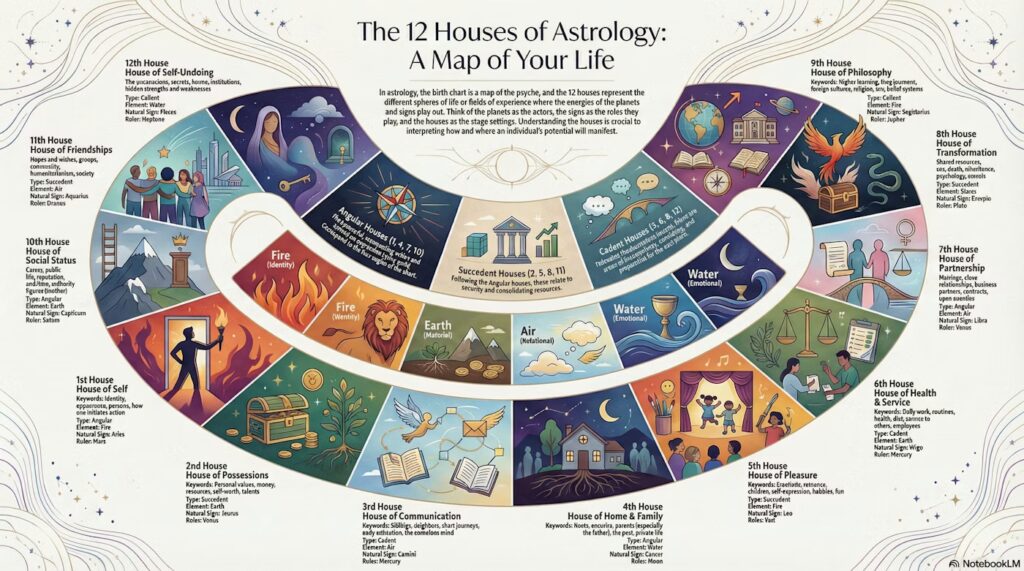
The Astrology of Disclosure

From an astrological perspective, the timing of Disclosure Day is not incidental.
The film arrives during one of the most extraordinary outer-planet configurations of the modern era.
Pluto is in Aquarius.
Uranus is entering Gemini.
Saturn and Neptune are forming their historic conjunction in Aries.
Taken together, this is a disclosure signature of exceptional magnitude.
Pluto in Aquarius exposes hidden systems, secret networks, technological power structures, and the shadow side of scientific authority. It forces collective confrontation with the invisible architectures shaping civilization.
This transit is not merely about technology.
It is about the power behind technology.
It asks:
Who controls the future?
Who controls knowledge?
Who controls the narrative of reality itself?
Uranus in Gemini accelerates information shock, technological disruption, media volatility, and sudden revelations. Gemini rules communication, signals, language, data, journalism, intelligence networks, and the nervous system of civilization.
When Uranus moves through Gemini, the information field becomes electric.
Narratives fracture.
Old categories collapse.
New evidence moves faster than institutions can contain it.
Historically, Uranus in Gemini has coincided with periods of technological acceleration, geopolitical instability, and major shifts in communication systems.
In the context of UAP disclosure, this suggests rapid changes in how information is released, interpreted, weaponized, and absorbed by the public.
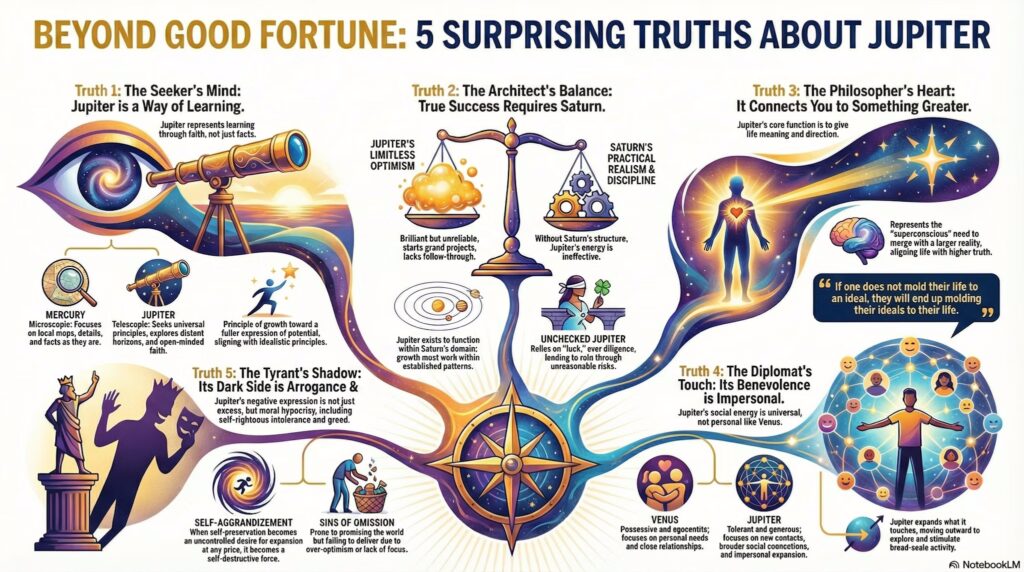
Then we have the Saturn-Neptune conjunction in Aries.
This may be the most important signature of all.
Saturn represents structure, authority, government, official reality, and institutional control.
Neptune represents mystery, concealment, myth, deception, spirituality, and the unseen.
When Saturn and Neptune conjoin, the boundary between official reality and hidden reality begins to dissolve.
In Aries, this conjunction initiates a new cycle around identity, conflict, courage, sovereignty, and confrontation.
The symbolism is unmistakable:
The old consensus reality is being breached.
What was once hidden behind Neptunian fog is being forced into Saturnian form.
The invisible seeks embodiment.
The myth demands institutional recognition.
This is precisely the archetypal terrain of disclosure.
Not simply “aliens exist,” but something far more destabilizing:
The official model of reality may be incomplete.
That is why the astrology surrounding Disclosure Day deserves serious attention.
The film does not arrive in a vacuum.
It arrives as the planetary cycles point toward revelation, technological rupture, institutional crisis, and a profound reorganization of collective belief.
The Real Question
The most important question surrounding Disclosure Day may not be whether the film contains hidden truths.
Instead, we should ask:
Why is the world ready for this story now?
In 1977, Close Encounters asked:
“What if we are not alone?”
Nearly fifty years later, Disclosure Day appears to ask a far more unsettling question:
“What if we’ve known all along?”
Whether Spielberg is participating in disclosure, anticipating disclosure, mythologizing disclosure, or simply reflecting the spirit of the age remains uncertain.
What is certain is this:
Humanity has entered a period in which the possibility of non-human intelligence is no longer a fringe idea.
It has become part of the global conversation.
And that alone represents a historic shift in consciousness.
So when Disclosure Day arrives, I would suggest watching it not merely as entertainment.
Watch it as a cultural intelligence briefing.
Observe the symbols.
Track the timing.
Listen to what is being normalized.
And ask yourself the deeper question:
Is this just another Hollywood blockbuster?
Or is it a cinematic threshold marker in the long, strange, and accelerating process of disclosure?
Perhaps the disclosure event many are waiting for is not a single announcement.
Perhaps it is already underway.