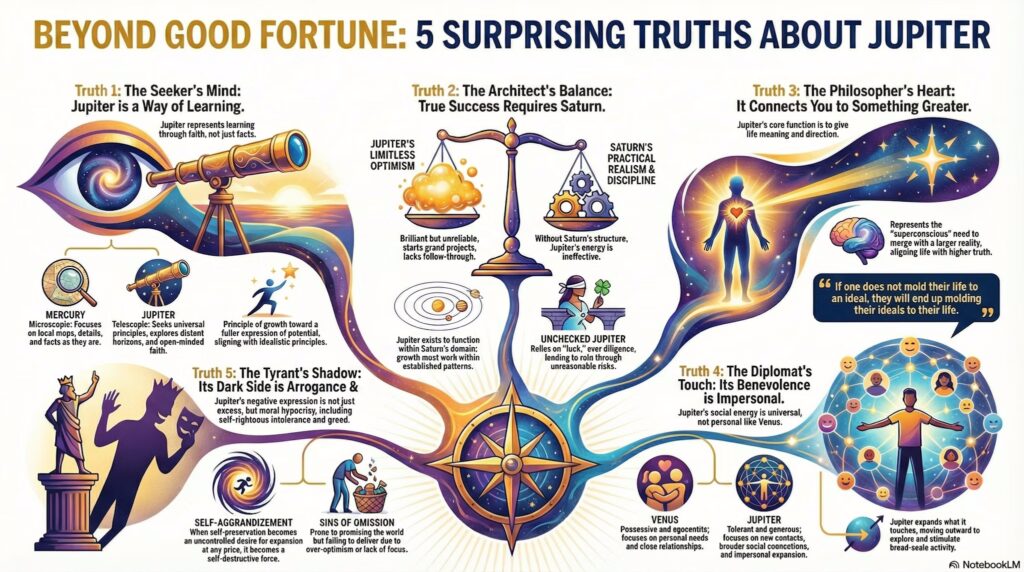
Roughly every 36 years, Saturn and Neptune meet in the sky, forming one of mundane astrology’s most historically resonant and symbolically revealing alignments. Across centuries, astrologers have associated these conjunctions with periods when established structures begin to erode, old certainties dissolve, and collective reality itself seems to blur. Saturn governs boundaries, institutions, law, governance, material limits, and the hard architecture of civilization. Neptune rules ideals, myths, dreams, spirituality, mass psychology, contagion, illusion, deception, sacrifice, and the longing for transcendence. When these two planets join, the result is often a historical atmosphere in which the visible framework of life is challenged by invisible forces.
In mundane astrology, Saturn–Neptune conjunctions are classic markers of structural dissolution and re-visioning. Institutions may weaken, borders may shift, ideologies may collapse, and previously unquestioned systems may suddenly appear porous, hollow, or untenable. At the same time, new visions emerge: utopian dreams, religious movements, revolutionary myths, technological imaginaries, and collective projections that compete to fill the vacuum left by fading orders. The cycle does not “cause” events in a mechanistic sense. Rather, as astrologers such as Chris Brennan, Nick Dagan Best, Richard Nolle, and other mundane analysts emphasize, these correlations are better understood as archetypal synchronicities: recurring patterns in which historical events mirror the symbolic logic of the planetary alignment.
The effects of a Saturn–Neptune conjunction usually unfold within a one- to two-year window around the exact alignment, and often across multiple exact hits when retrogrades create triple conjunctions. During these periods, familiar themes recur throughout the historical record: the end or collapse of empires and ideologies, the rise of reform movements and revolutions, the redrawing of borders, the exposure of hidden networks or conspiracies, the emergence of media and technologies that alter perception, and painful clashes between idealism and material reality. In some cycles, this manifests as spiritual or scientific breakthrough; in others, as paranoia, epidemic disease, propaganda, disillusionment, or financial contraction.
The Historical Pattern
Looking back across two millennia, Saturn–Neptune conjunctions repeatedly coincide with moments when political, religious, and civilizational frameworks come under severe pressure.
Roman and Early Medieval Eras
In the Roman and early medieval world, these conjunctions often appear alongside imperial strain, frontier tensions, religious transitions, and the reorganization of authority. The conjunction of December 16, 8 AD, at 22° Sagittarius occurred during the early reign of Tiberius, when Germanicus’ campaigns and the consolidation of imperial rule after Augustus were underway. The February 20, 53 AD conjunction at 12° Pisces falls within the Claudian era, just before the transition to Nero, as Rome expanded in Britain and early Christian communities continued to spread throughout the empire. By May 17, 88 AD, at 1° Gemini, Domitian’s reign was marked by frontier conflict and internal purges, with the Dacian wars beginning to test Rome’s defensive capacity.
The August 12, 123 AD conjunction at 19° Leo is especially striking because of its correspondence with Hadrian’s Wall, whose construction began around 122 AD. Here the symbolism is almost literal: Saturn signifies the wall, the limit, the imperial defensive line; Neptune reflects the recognition that endless expansion has ended and that the empire must redefine itself. By the conjunction of October 27, 159 AD, at 7° Scorpio, the Roman world stood near the threshold of the Antonine Plague and the mounting crises of Marcus Aurelius’ era, in which disease and war began eroding imperial confidence.
The 196 AD Capricorn conjunction, which occurred as a triple hit, belongs to the aftermath of the Year of the Five Emperors and the rise of Septimius Severus. Civil war dissolved the previous order, and a new dynasty emerged from the wreckage. Similar themes continue through the conjunction of March 24, 232 AD, amid Roman-Sasanian conflict and internal rebellion, and the June 6, 267 AD conjunction during the deepening Crisis of the Third Century, when invasions, fragmentation, and instability nearly shattered imperial continuity. By October 1, 302 AD, Diocletian’s reforms and the intensifying persecutions of Christians again reflected Saturn–Neptune’s tension between state control and ideological-spiritual challenge.
The fourth and fifth centuries show the same archetype with increasing dramatic force. The triple conjunctions of 339 and 375 unfold against the consolidation and subsequent fragmentation of Constantine’s Christian empire, as barbarian migrations increasingly undermined Roman frontiers. The April 24, 411 AD conjunction at 21° Taurus followed immediately after the Visigothic sack of Rome in 410, a symbolic event long remembered as the beginning of Western Roman decline. The July 13, 446 AD conjunction at 9° Leo coincided with Attila the Hun’s invasions, and the 481–482 Libra triple conjunction belongs to the rise of Clovis and the emergence of the Frankish order after the formal fall of the Western Roman Empire in 476.
The conjunctions of late antiquity and the early Middle Ages continue this motif of civilizational transition. The January 17, 519 AD conjunction belongs to the Byzantine sphere and the early Justinianic era. The March 18, 555 AD conjunction reflects the late phase of Justinian’s wars, when imperial reconquest had reached its peak but also exposed the strains of overreach. The June 2, 590 AD conjunction occurred as Gregory the Great assumed the papacy amid plague, helping shift authority toward the medieval Church. Particularly important are the conjunctions of 625 and 661, which frame the rise of Islam and the early caliphates. Here Saturn–Neptune appears at the birth of a new religious and political order that dissolved old Byzantine and Persian structures and reconfigured the map of the Near East.
By the eighth and ninth centuries, the cycle continues to accompany massive geopolitical reorganization. The 698–699 Aquarius triple conjunction aligns with the Umayyad expansion into North Africa and toward Iberia. The conjunction of May 6, 734 AD follows the Battle of Tours period and the halting of the Islamic advance into Western Europe. The July 18, 769 AD conjunction belongs to Charlemagne’s rise, while the 804–805 Libra triple conjunction frames his imperial coronation in 800 and the birth of a renewed imperial vision in Western Europe. Yet by December 16, 841 AD, the Carolingian order was already fragmenting, with the Treaty of Verdun in 843 dividing the empire. The pattern is consistent: a vision crystallizes, then dissolves into new boundaries and successor forms.
Medieval Dissolution, Plague, Crusade, and Reform
From the eleventh through the fifteenth centuries, Saturn–Neptune conjunctions continue to coincide with religious fervor, imperial contests, invasions, and systemic breakdown. The 1021 Aquarius triple conjunction belongs to the prehistory of the Crusades and Norman expansion. The April 16, 1057 conjunction at 1° Taurus coincides with the rise of the Seljuk Turks and mounting Byzantine decline. By June 28, 1092, at 20° Cancer, the stage was being set for the First Crusade, launched in 1095: a classic Saturn–Neptune event in which religious idealism merged with military reality, pilgrimage with conquest, and spiritual vision with bloodshed.
The October 24, 1127 conjunction at 8° Libra saw feudal consolidation in Europe and major war in East Asia. The 1164 Sagittarius triple conjunction marked the conflict between Henry II and Thomas Becket, dramatizing the clash between secular and ecclesiastical authority. The 1200–1201 Pisces triple conjunction preceded the Fourth Crusade and the 1204 sack of Constantinople, a shattering of Christian unity by Christian hands. What had been framed as a sacred mission became a story of betrayal, plunder, and civilizational fracture.
The conjunction of May 11, 1236, at 5° Gemini aligns with the Mongol invasions, which dissolved old boundaries across Eurasia and redrew the political imagination of the known world. The July 27, 1271 conjunction at 23° Leo belongs to the era of Marco Polo and the Mongol Empire at its greatest extent, even as fragmentation was already seeded within its vastness. The 1307 Scorpio triple conjunction is one of the clearest examples of Saturn–Neptune symbolism in the medieval era: the arrest of the Knights Templar on Friday, October 13, 1307, amid charges, secrecy, confiscation, and the exposure or invention of hidden networks.
The January 22, 1344 conjunction at 1° Aquarius lies within orb of the Black Death’s arrival in Europe a few years later, from 1347 to 1351. Few events express Saturn–Neptune more starkly than plague: the dissolution of bodily and social boundaries, the collapse of ordinary structures, the confrontation with mortality, and the surge of fear, mysticism, scapegoating, and apocalyptic imagination. The March 21, 1380 conjunction at 21° Aries belongs to the late medieval world of the Hundred Years’ War and the challenge of reformist voices such as Wycliffe. By June 13, 1415, at 10° Cancer, the Battle of Agincourt and the early Hussite period reflect the conjunction’s signature mix of martial struggle, national myth, and religious upheaval.
The conjunction of September 19, 1450, at 28° Virgo is especially rich in symbolic resonance. Within the orb came the fall of Constantinople in 1453, ending the Byzantine Empire, while Gutenberg’s printing revolution began to dissolve old boundaries around knowledge, authority, and communication. A world closed; another opened. The December 22, 1486 conjunction at 17° Sagittarius belongs to the atmosphere of the Spanish Inquisition and the approach of the Columbian voyages, when Europe’s religious control systems intensified even as geographic horizons were about to explode outward.
Reformation, Empire, and Revolution
The early modern period offers some of the most compelling Saturn–Neptune correlations. The 1523–1524 Pisces triple conjunction coincided with the German Peasants’ War and the volatile social aftershocks of the Protestant Reformation. This is quintessential Saturn–Neptune symbolism: old religious structures challenged by visions of renewal, spiritual truth translated into social unrest, and idealism colliding with harsh political reality.
The May 11, 1559 conjunction at 26° Taurus aligns with the Elizabethan religious settlement in England and the Treaty of Cateau-Cambrésis, which ended the Italian Wars. The August 7, 1594 conjunction at 14° Leo belongs to the winding down of the French Wars of Religion and the approach of the Edict of Nantes in 1598, which temporarily granted Protestants legal recognition. Once again, ideological struggle produces a new but fragile structural settlement.
The 1629–1630 Scorpio triple conjunction falls during the Thirty Years’ War, one of Europe’s most devastating conflicts, in which confessional identity, dynastic ambition, and geopolitical realignment fused into prolonged civilizational crisis. The January 2, 1667 conjunction at 21° Capricorn belongs to the Anglo-Dutch wars and the aftermath of the Great Fire of London, another moment when urban structure, commercial empire, and reconstruction were central themes. By March 27, 1703, at 11° Aries, the founding of St. Petersburg during the Great Northern War dramatized the attempt to manifest an imperial vision in a harsh environment: Neptune’s dream embodied through Saturn’s stone.
The July 2, 1738, conjunction at 0° Cancer belongs to the spread of Enlightenment ideals and the tensions leading toward the War of the Austrian Succession. Then comes the conjunction of September 27, 1773, at 18° Virgo, within months of the Boston Tea Party. Here, Saturn–Neptune accompanies one of the great anti-imperial threshold moments of the modern world. The authority of empire is challenged by a moral and ideological vision of liberty, representation, and new nationhood. The old order loses legitimacy before it loses territory.
The Modern Era: Communism, Propaganda, Mass Media, and the Fall of Walls
The nineteenth and twentieth centuries give us the most extensively documented Saturn–Neptune conjunctions, and the symbolic pattern becomes especially vivid.
The December 1, 1809 conjunction at 6° Sagittarius belongs to the Napoleonic era, when Europe was being reorganized through war. Within orb were the births of Abraham Lincoln and Charles Darwin, two figures who would later challenge inherited social and cosmological structures in profound ways. The 1846 Aquarius triple conjunction is a watershed. Neptune itself was discovered on September 23, 1846, during this cycle, symbolically amplifying the conjunction’s themes. The Mexican-American War began, the Irish Potato Famine reached devastating intensity, and within the conjunction’s wider orb Karl Marx would publish the Communist Manifesto in 1848. Here we see a powerful emergence of ideological modernity: socialism, mass suffering, civil disobedience, territorial expansion, and the unveiling of new planetary and philosophical realities.
The May 12, 1882 conjunction at 16° Taurus occurred amid the Chinese Exclusion Act in the United States, imperial conflict in Egypt, and the unraveling of reformist currents in Russia after the assassination of Alexander II. Borders, exclusion, and reaction define the period. Then comes the August 1, 1917 conjunction at 4° Leo, one of the clearest Saturn–Neptune signatures in modern history: the Bolshevik Revolution, America’s entry into World War I, trench warfare, chemical warfare, the tightening of state propaganda, and the social engineering impulses that would define much of the twentieth century. A new ideological order is born amid mass sacrifice and the industrialization of illusion and violence.
The 1952–1953 Libra triple conjunction unfolded at another major inflection point. Stalin died in March 1953. The Korean War armistice followed in July. McCarthyism and the Red Scare peaked, while the Army–McCarthy hearings soon exposed their excesses. NATO and the United Nations solidified the postwar institutional order, even as nuclear fear and television culture reshaped mass consciousness. This conjunction exemplifies the paradox of Saturn and Neptune: strong institutions paired with collective anxiety, ideological control paired with image-making, and the management of reality through media.
Then the 1989 Capricorn triple conjunction arrived with extraordinary precision. The Berlin Wall fell on November 9, 1989. The Eastern Bloc collapsed. The revolutions of 1989 dissolved the rigid architecture of the Cold War. Tiananmen Square dramatized the clash between idealism and state force. Nelson Mandela’s release followed in 1990, and the World Wide Web emerged as a new medium dissolving boundaries of information and geography. Few conjunctions better capture Saturn–Neptune’s symbolism: walls come down, ideologies lose coherence, and a new planetary dream of global connectivity appears.
This also suggests how Saturn–Neptune cycles can bracket long ideological arcs. One can plausibly read 1846, with Neptune’s discovery and the rise of communist theory, and 1989, with the collapse of Soviet bloc communism, as two ends of a broad historical chapter. The cycle does not simply repeat events; it reframes the tension between system and vision in each era’s own language.
2026: The Conjunction at 0° Aries
The exact Saturn–Neptune conjunction of February 20, 2026, at 0°45′ Aries is especially notable because it occurs at 0° Aries, one of the zodiac’s most symbolically charged points and the beginning of a new sign. In mundane terms, this suggests not merely dissolution, but inaugural dissolution: the unmaking of one era at the threshold of another.
As of March 2026, the early manifestations already fit the cycle’s familiar themes. The post-Cold War order continues to fracture under geopolitical realignment. Institutional legitimacy is under pressure across multiple nations. AI, deepfakes, synthetic media, and algorithmically mediated narratives are blurring the line between truth and fabrication on an unprecedented scale. Borders—physical, digital, ideological, and civilizational—are being renegotiated. Collective visions of the future compete with grim material constraints. Utopian promises and apocalyptic anxieties circulate simultaneously.
This is classic Saturn–Neptune terrain. The question is not merely what collapses, but what replaces it. When Saturn and Neptune meet, humanity often discovers that the structures it thought were solid were partly constructed from belief, narrative, projection, and consensus. Yet the reverse is also true: dreams demand form, ideals demand institutions, and visions must eventually become policy, architecture, law, technology, or sacrifice. The conjunction reveals both the fragility of reality and the necessity of rebuilding it.
Recent Events Correlating With the 2026 Conjunction
Second Half of 2025 Through March 2026
The orb of influence for the 2026 conjunction began manifesting in the second half of 2025, aligning with familiar Saturn–Neptune themes: boundary dissolution, ideological upheaval, technological disruption, and geopolitical reconfiguration.
Border tensions and geopolitical realignments emerged as a major signature. In July 2025, longstanding border disputes between Cambodia and Thailand escalated into open conflict over the ancient Prasat Ta Muen Thom temple, displacing tens of thousands and drawing outside diplomatic intervention. The symbolism is strikingly literal: contested borders, fragile sovereignty, and the exposure of how quickly regional stability can dissolve. Simultaneously, ongoing conflicts in Sudan and Myanmar continued to demonstrate the erosion of state structures amid civil war, displacement, and famine risk.
Ideological shifts and protest movements also intensified. Beginning in late December 2025, large-scale protests erupted in Iran, initially sparked by economic breakdown, currency instability, and inflation, but rapidly evolving into demands for regime transformation. By March 2026, demonstrations had spread nationally, exposing fractures within the Islamic Republic’s authority and blending reformist, secular, and monarchist currents. More broadly, Gen Z-led protest movements across multiple countries expressed the conjunction’s classic pattern: youthful idealism confronting rigid institutions, with collective vision colliding against entrenched political systems.
Technological blurring of reality became one of the clearest contemporary expressions of the cycle. Deepfake technology advanced dramatically during 2025, reaching a level of sophistication that enabled real-time political misinformation, identity fraud, and social destabilization. This development maps almost perfectly onto Neptune’s symbolism of illusion, simulation, and deception operating within Saturnian structures of governance, media, and law. The issue is no longer merely false content, but the destabilization of trust itself.
U.S. strategic pivot and institutional reorganization likewise reflected the conjunction’s themes. A harder hemispheric posture toward Venezuela, combined with intensified immigration enforcement and sharper border hardening, signaled an effort to redraw the meaning of sovereignty, labor, and national identity. Such developments illustrate Saturn’s attempt to reassert order under Neptunian conditions of mass migration, ideological projection, and dissolving prior arrangements.
The rapid acceleration of AI and AGI discourse may be the most archetypally Neptunian manifestation of all. The second half of 2025 marked a decisive shift toward reasoning-based AI systems, agentic tools, and multi-step autonomous workflows. With frontier models approaching expert-level performance in select domains, predictions from major AI leaders increasingly placed artificial general intelligence within a very short horizon. Massive capital inflows, strategic partnerships, and enterprise deployments all contributed to the sense that humanity had crossed a threshold: reality itself was becoming mediated through nonhuman cognition. This is not only a technological revolution but a Saturn–Neptune one, dissolving old epistemic boundaries while forcing institutions to confront a radically altered future.
AI-empowered robotics extended this pattern into the physical world. Humanoid systems moved from spectacle to deployment in warehouses, factories, and limited domestic environments. These developments blur the boundary between person and machine, labor and automation, tool and agent. They reorganize material systems while evoking both utopian promise and civilizational anxiety. In Saturn–Neptune terms, embodied AI represents dream becoming structure, but also structure becoming uncanny.
Taken together, these developments underscore the conjunction’s archetypal field: dissolving borders, ideological fracture, reality-blurring technologies, and revolutionary reorganization amid geopolitical and economic instability.
Summary of the Saturn–Neptune Pattern
Saturn–Neptune conjunctions, occurring roughly every 36 years, are enduring mundane astrology markers of structural dissolution and re-visioning. Saturn’s boundaries, institutions, and realities erode or reform under Neptune’s ideals, illusions, dreams, fears, deceptions, and collective visions. Events often unfold within a plus-or-minus one- to two-year orb of the exact conjunctions, including triple hits caused by retrograde motion.
Recurring themes include:
- the end or collapse of empires, ideologies, or old orders
- revolutions, uprisings, or ideological movements
- border and boundary changes, both literal and symbolic
- exposure of secrets, conspiracies, or hidden groups
- scientific, spiritual, or media breakthroughs that blur reality
- clashes between idealism and harsh reality, sometimes accompanied by paranoia, epidemics, or financial stress
These correlations are best understood as archetypal synchronicities rather than strict causal mechanisms. Modern conjunctions are the most thoroughly documented, while ancient examples show comparable patterns of imperial flux, religious transformation, and reform amid sparser records. Taken together, the cycle suggests that humanity repeatedly revisits the same essential drama: the tension between rigid structures and boundless visions.
The Enduring Meaning of the Cycle
Across the centuries, Saturn–Neptune conjunctions seem to coincide with moments when the world’s scaffolding is thinned or exposed. Empires lose coherence. Religious systems split or reform. Hidden orders are persecuted or revealed. Plagues, propaganda, and mass movements alter collective consciousness. New media dissolve old monopolies on meaning. Revolutions promise redemption and deliver complexity. Borders harden in some places and vanish in others.
What makes this cycle so compelling is that it captures a fundamental historical rhythm: the recurring dance between rigid structure and boundless vision. Saturn provides form, but can calcify into repression. Neptune inspires transcendence, but can dissolve into confusion or fantasy. Their conjunction marks eras when humanity must confront both problems at once. The old forms no longer hold, but the new dream is not yet stable.
That is why Saturn–Neptune periods are often turbulent, disorienting, and historically consequential. They expose the illusion within the system and the system within the illusion. They dissolve not only institutions, but the myths that sustained them. And in doing so, they create the conditions for reimagining the world.
Summary of Saturn-Neptune Conjunctions
Saturn-Neptune conjunctions (~every 36 years) are classic mundane astrology markers of structural dissolution and re-visioning: Saturn’s boundaries, institutions, and realities erode or reform under Neptune’s ideals, illusions, dreams, fears, deceptions, or collective visions. Events often unfold within a ±1–2 year orb of the exact hits (including triples from retrogrades). Themes recur across history:
- End/collapse of empires, ideologies, or old orders (e.g., walls fall, communism rises/falls).
- Revolutions, uprisings, or ideological movements (socialist/communist, religious reforms, independence struggles).
- Border/boundary changes (literal or metaphorical).
- Exposure of secrets, conspiracies, or hidden groups (Templars, McCarthyism).
- Scientific/spiritual breakthroughs or media/tech leaps that blur reality.
- Idealism vs. harsh reality clashes, sometimes with paranoia, epidemics, or financial adjustments.
Correlations are archetypal synchronicities, not strict causation (per astrologers like Chris Brennan, Nick Dagan Best, Richard Nolle, and mundane analysts). Modern ones are best-documented; ancient ones show patterns of empire flux, religious shifts, or reforms amid sparser records. Data draws from historical records cross-referenced with astrological sources (CHANI, Astrology Podcast episodes, Yasmin Boland, etc.).
1st–10th Centuries AD (Roman/early medieval shifts; early Christianity, empire boundaries)
- 16 Dec 8 (22° Sag): Tiberius’ early reign (post-Augustus); Germanicus’ Germanic campaigns — imperial consolidation amid border tensions.
- 53 Feb 20 (12° Pis): Claudius’ era peaks; transition to Nero (54 AD); Roman expansion in Britain; early Christian communities spreading (Neptunian mysticism vs. Saturnian state).
- 88 May 17 (1° Gem): Domitian’s reign; Dacian wars begin — frontier defenses and internal purges.
- 123 Aug 12 (19° Leo): Hadrian’s Wall construction (~122 AD) — literal boundary-building; empire at zenith but shifting to defense.
- 159 Oct 27 (7° Sco): Antonine Plague begins (~165, close orb); Marcus Aurelius’ wars — health crisis eroding stability.
- 196 (Cap, triple): Year of the Five Emperors’ chaos (193); Septimius Severus seizes power — civil wars dissolve the old order, a new dynasty reforms the empire.
- 232 Mar 24 (16° Ari): Roman-Sasanian Persian wars intensify; internal rebellions; Origen’s Christian theology flourishes (ideological foundations).
- 267 Jun 6 (5° Can): Crisis of the Third Century deepens — barbarian invasions, empire fragmentation.
- 302 Oct 1 (23° Vir): Diocletian’s reforms; early Christian persecutions ramp up.
- 339 (Sag, triple) / 375 (Pis, triple): Constantine’s Christian empire consolidates, then fragments; barbarian migrations begin eroding Roman borders.
- 411 Apr 24 (21° Tau): Rome sacked by Visigoths (410, orb) — symbolic end of Western Roman dominance.
- 446 Jul 13 (9° Leo): Attila the Hun’s invasions peak — “Scourge of God” dissolving old European structures.
- 481–482 (Lib, triple): Clovis I unites the Franks; the fall of the Western Roman Empire is formalized (476 orb) — a new medieval order emerges.
- 519 Jan 17 (17° Cap): Byzantine reconquests under Justin I; early Justinian preparations.
- 555 Mar 18 (7° Ari): Justinian’s Gothic/Lazic Wars end phases — Byzantine empire peaks then strains.
- 590 Jun 2 (25° Gem): Gregory the Great becomes Pope; plague in Rome; shift to papal influence.
- 625 Sep 14 (13° Vir) / 661 Dec 17 (2° Sag): Rise of Islam (Muhammad’s Hijra 622 orb; early caliphates) — new religious/political order dissolves old Byzantine/Persian structures.
- 698–699 (Aqu, triple): Umayyad expansions; North African/Spanish conquests begin.
- 734 May 6 (12° Tau): Battle of Tours prelude (732 orb) — Islamic advance halted in Europe.
- 769 Jul 18 (0° Leo): Charlemagne’s early campaigns; Carolingian Renaissance seeds.
- 804–805 (Lib, triple): Charlemagne crowned Holy Roman Emperor (800 orb) — new imperial vision.
- 841 Dec 16 (7° Cap): Treaty of Verdun (843) divides the Carolingian Empire — fragmentation of power.
- 878 Mar 9 (27° Pis): Alfred the Great’s wars against Vikings — English unification begins.
- 913 Jun 7 (16° Gem) / 948 Sep 2 (4° Vir) / 984 Nov 12 (22° Sco): Viking Age peaks, Holy Roman Empire consolidations, and early feudal structures solidify amid raids/dissolutions.
11th–15th Centuries AD (Medieval power shifts, Crusades, plagues, reforms)
- 1021 (Aqu, triple): Early Crusades prelude; Norman expansions.
- 1057 Apr 16 (1° Tau): Seljuk Turks rise; Byzantine decline accelerates.
- 1092 Jun 28 (20° Can): First Crusade launched (1095 orb) — religious idealism meets military reality.
- 1127 Oct 24 (8° Lib): Jin-Song wars in China; European feudal consolidations.
- 1164 (Sag, triple): Henry II–Becket conflict; Plantagenet power struggles.
- 1200–1201 (Pis, triple): Fourth Crusade (1204 sacks Constantinople) — Christian unity dissolves.
- 1236 May 11 (5° Gem): Mongol invasions peak in Europe/Middle East.
- 1271 Jul 27 (23° Leo): Marco Polo’s travels begin (1271); the Mongol Empire is at its height, then begins to rapidly fragment.
- 1307 (Sco, triple): Oct 13, 1307 — Knights Templar arrests (Friday the 13th); papal-French power plays expose “secret” orders.
- 1344 Jan 22 (1° Aqu): Black Death arrives in Europe (1347–51 orb) — massive societal dissolution.
- 1380 Mar 21 (21° Ari): Hundred Years’ War escalates (e.g., young Richard II/Charles VI); Wycliffe’s Bible critiques challenge Church authority.
- 1415 Jun 13 (10° Can): Battle of Agincourt; Hussite Wars prelude (religious reform).
- 1450 Sep 19 (28° Vir): Fall of Constantinople (1453 orb) ends Byzantine Empire; Gutenberg printing press spreads (1450s) — knowledge boundaries dissolve.
- 1486 Dec 22 (17° Sag): Spanish Inquisition ramps up; pre-Columbian explorations.
16th–18th Centuries AD (Reformations, revolutions, colonial shifts)
- 1523–1524 (Pis, triple): German Peasants’ War (1524–25) — early Protestant Reformation uprisings.
- 1559 May 11 (26° Tau): Elizabethan England religious settlement; Treaty of Cateau-Cambrésis ends Italian Wars.
- 1594 Aug 7 (14° Leo): French Wars of Religion wind down; Edict of Nantes (1598 orb) grants Protestant rights.
- 1629–1630 (Sco, triple): Thirty Years’ War rages; Wallenstein’s campaigns.
- 1667 Jan 2 (21° Cap): Dutch Golden Age; Anglo-Dutch wars; Great Fire of London aftermath (1666 orb).
- 1703 Mar 27 (11° Ari): St. Petersburg founded; War of Spanish Succession; Great Northern War.
- 1738 Jul 2 (0° Can): War of Austrian Succession begins (1740 orb); Enlightenment ideas spread.
- 1773 Sep 27 (18° Vir): Boston Tea Party (Dec 16, 1773) — sparks American Revolutionary War (1775–83), challenging the empire.
19th–20th Centuries AD (Industrial/ideological eras, communism cycle)
- 1809 Dec 1 (6° Sag): Napoleonic Wars peak (Peninsular War); births of Abraham Lincoln & Charles Darwin (Feb 1809, orb) — future reformers/evolution ideas.
- 1846 (Aqu, triple Apr/Sep/Dec): Neptune discovered (Sep 23, 1846); Mexican-American War begins (US territorial expansion); Irish Potato Famine peaks; Karl Marx drafts Communist Manifesto (1848 orb); Thoreau’s “Civil Disobedience.”
- 1882 May 12 (16° Tau): Chinese Exclusion Act (US); Anglo-Egyptian War; Alexander II assassination (1881 orb) — Russian reforms unravel.
- 1917 Aug 1 (4° Leo): Bolshevik (Russian) Revolution (Oct/Nov); US enters WWI; trench/chemical warfare; Prohibition movement.
- 1952–1953 (Lib, triple): Stalin dies (Mar 1953); Korean War armistice (Jul 1953); McCarthyism/Red Scare peak & Army-McCarthy hearings; nuclear arms race; TV/consumer culture boom; NATO/UN solidify.
- 1989 (Cap, triple Mar/Jun/Nov): Berlin Wall falls (Nov 9); Eastern Bloc collapses; Revolutions of 1989; end of the Cold War; Tiananmen Square protests; Nelson Mandela released (1990 orb); World Wide Web invented — barriers dissolve globally.
21st Century (to present)
- 2026 Feb 20 (0°45’ Ari): Exact conjunction (first at 0° Aries in millennia) — emerging themes of new-era resets (post-Cold War order shifts, AI/deepfake reality-blurring, boundary redefinitions). As of March 2026, early manifestations align with ongoing geopolitical realignments, idealism-reality clashes, and institutional reimaginings, amplified by disruptive AI/AGI and robotic advancements.
These alignments often bookend multi-decade cycles (e.g., communism from 1846 rise to 1989 fall). For deeper dives on any specific date, ephemeris software or historical timelines confirm the orb overlaps. The cycle highlights humanity’s recurring dance between rigid structures and boundless visions — frequently turbulent, occasionally transformative.