Why one of the strangest theories of the Epstein saga refuses to go away
There are scandals that remain scandals, and then there are scandals that begin to behave like myth.
The Jeffrey Epstein affair long ago ceased to be merely a criminal case involving sex trafficking, elite compromise, and intelligence-adjacent power. It evolved into something darker and more archetypal: a black mirror held up to the American ruling class, reflecting not just corruption, but an entire hidden architecture of influence. By the time the public had absorbed the outlines of Epstein’s network — the underage trafficking, the extraordinary access to royalty, billionaires, scientists, and political figures, the anomalous death in federal custody, the imprisonment of Ghislaine Maxwell — the story had already begun to mutate into a larger question: what else was this network really doing?
Among the more controversial attempts to answer that question is a theory advanced by philosopher Jason Jorjani, who argues that Epstein’s interests may have extended well beyond sexual blackmail and elite social engineering. In Jorjani’s telling, the deeper pattern links Epstein and the Maxwell family to gravity research, eugenics, Atlantean mythology, and, ultimately, the UFO problem.
This is not a conventional thesis. It does not proceed like a legal brief. It moves instead by pattern recognition: converging themes, recurring symbols, suspicious overlaps, and the suggestion that certain obsessions — gravity, genetics, Nordics, Atlantis — may not be incidental at all. Whether one regards the theory as a daring synthesis or as speculation arranged into a compelling narrative, it points toward an uncomfortable truth: the Epstein story may still be far larger than the public is prepared to admit.
And symbolically, it is hard to ignore when all of this broke open.
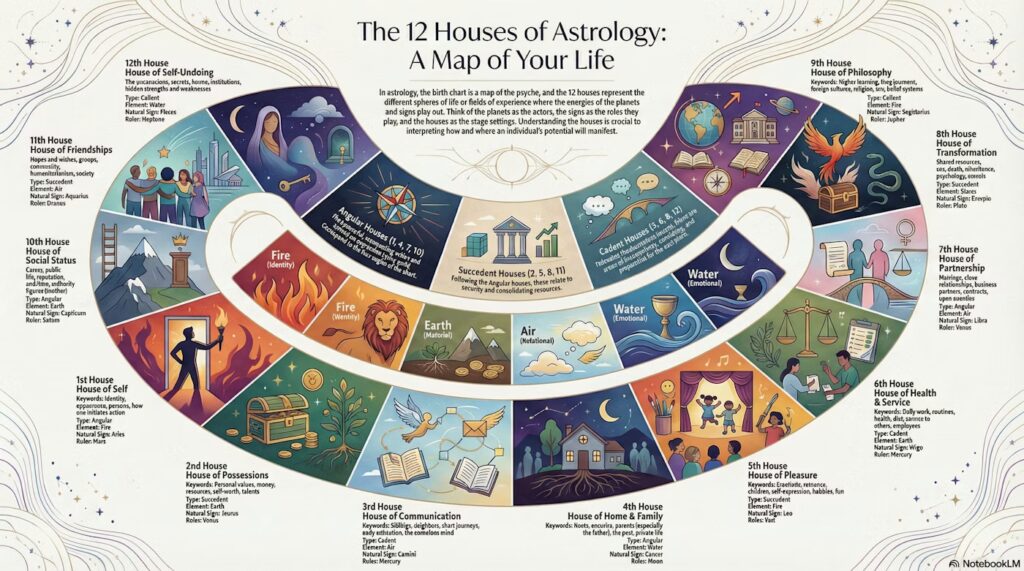
Because the great unraveling of elite secrecy surrounding Epstein and Maxwell reached public consciousness during the Pluto Return of the United States — the rare astrological event in which transiting Pluto returned to the same degree it occupied on July 4, 1776. Exact hits occurred in February, July, and December of 2022, though the larger psychic and political field had been building for years. In mundane astrology, Pluto governs buried power, plutocracy, coercion, blackmail, criminal underworlds, sexual shadow material, intelligence operations, and processes of exposure through destruction. A Pluto Return does not merely signify crisis. It signifies the forced revelation of what a nation has become beneath its official mythology.
If ever there were a scandal suited to a U.S. Pluto Return, it was Epstein.
The gravity question
At the center of Jorjani’s argument is the claim that Epstein’s scientific interests were not simply the vanity projects of a rich voyeur eager to surround himself with famous minds. Rather, Epstein appears — in this interpretation — as someone unusually interested in one of the most sensitive frontiers in modern physics: gravity.
This is where the theory begins to depart sharply from the mainstream account. Epstein did not merely host dinner parties with intellectual celebrities. He inserted himself into networks involving top-tier physicists and reportedly took an interest in gravitational anomalies, quantum effects, and related fields that have long hovered at the edge of advanced propulsion speculation. For Jorjani, that matters. Gravity is not just another scientific curiosity. It is the bottleneck problem. Any serious inquiry into breakthrough aerospace technology, anti-gravity rumors, or theoretical propulsion beyond conventional rocketry eventually runs through gravity.
From that perspective, Epstein’s attraction to gravity research begins to look less like eccentric philanthropy and more like strategic curiosity.
Was he simply sponsoring cutting-edge science in the abstract? Or was he circling a highly restricted domain — one with implications for propulsion, aerospace black programs, and the technological core of the UFO mystery?
Jorjani leans toward the latter. He suggests that once Epstein’s interest in gravity is considered alongside his institutional access, his intelligence-world proximity, and his social positioning as a broker among elite specialists, the possibility emerges that he was not just collecting brilliant people, but aggregating capabilities.
Robert Maxwell and the gatekeeping of knowledge
To understand why Jorjani sees this as more than a personal quirk, one has to move backward to Robert Maxwell, Ghislaine Maxwell’s father.
Robert Maxwell has long appeared in the historical record as a figure who cannot be contained by any single description. Publisher, fixer, intelligence asset, power broker, possible double or triple operator — he was a man whose career sat at the intersection of media, espionage, finance, and influence. In Jorjani’s account, one of Maxwell’s most important but least appreciated functions was scientific gatekeeping.
Through his control of major academic publishing channels, Maxwell occupied a structurally powerful role in the dissemination — or suppression — of high-value scientific work. Jorjani raises the possibility that breakthroughs relevant to propulsion, gravity manipulation, or electrogravitics may have passed through ecosystems Maxwell had the power to mediate. Whether or not one accepts the strongest version of that claim, the underlying point is hard to dismiss: control over information is as important as control over laboratories.
If Robert Maxwell represented one generation of scientific-intelligence gatekeeping, Epstein may have represented another: less formal, more socially engineered, more networked — but aimed at the same horizon.
In this frame, Epstein becomes not just a blackmailer or trafficker, but a curator of access. A node. A broker positioned where science, money, kompromat, and covert agendas overlap.
From genetics to “Nordics”
The theory darkens considerably when it turns from gravity to biology.
One of the most disturbing features of the Epstein story has always been the sense that sexual exploitation may not have been the endpoint, but part of a wider program of selection, manipulation, and control. Jorjani pushes this idea into explicitly eugenic territory. He notes persistent allegations that Epstein favored a narrow physical type among the young women brought into his orbit and references claims that his New Mexico ranch may have been intended as a site for reproductive experimentation or selective breeding.
Standing alone, these claims could be interpreted as expressions of private pathology, elite perversity, or techno-utopian narcissism. But Jorjani places them alongside Epstein’s continued access to high-level academic environments connected to evolutionary biology and emergent biotechnology. The result is a more sinister reading: that Epstein’s fascination with genetics may have overlapped with a transhuman or eugenic ambition.
Then comes the strangest leap in the argument: the fixation on Nordics.
In UFO lore, the “Nordic” is an old and familiar figure — tall, beautiful, often blonde, often presented as spiritually or biologically superior. In postwar contactee culture, these beings frequently appeared as quasi-angelic visitors from Venus or elsewhere, bearing messages about human evolution, cosmic order, and hidden destiny. But underneath the utopian language, many of these narratives carried unmistakable undertones of racial hierarchy.
Jorjani argues that the alleged selective preference within Epstein’s world for Nordic-looking genetic material echoes this older mythology in a way too eerie to ignore. In his reading, the overlap between eugenic desire and UFO symbolism is not accidental. It may indicate that Epstein’s circle was not merely fetishizing a phenotype, but acting out a mythic script — one tied to the same racialized cosmology that has haunted portions of the UFO subculture for decades.
Atlantis as code

If gravity is the technological key in Jorjani’s theory, Atlantis is the symbolic one.
Few elements of the Epstein-Maxwell world have received less serious attention, and yet the Atlantean motif appears again and again around them: the submarine reportedly associated with the name Atlantis, Poseidon imagery, the oceanic settings, Ghislaine Maxwell’s underwater interests, and the broader fascination with submerged ruins in the Caribbean basin. Jorjani treats these not as decorative eccentricities, but as clues to an ideology.
Atlantis in the Western imagination is never merely a lost city. It is a memory-fragment of antediluvian knowledge, vanished technology, priestly science, and catastrophic civilizational collapse. It is what remains when history becomes myth and myth begins to imply suppressed memory. To invoke Atlantis is to gesture toward an origin point hidden beneath official chronology.
In the Epstein context, Atlantis begins to function as a kind of code. It links elite exploration, undersea ruins, ancient high technology, and the fantasy of a lost order whose secrets might be recovered. It is precisely the kind of symbol one would expect to appear wherever esotericism, techno-power, and elite rebellion converge.
Jorjani goes further. He suggests that Atlantis may signify not submission to an existing hidden hierarchy, but rebellion against one. This is where the theory takes on an almost Gnostic cast. If a covert ruling structure already exists — whether one imagines it as intelligence oligarchy, breakaway civilization, or a deeper technocratic order — then Atlantis becomes the emblem of an alternative lineage of power, one seeking parity with or independence from the dominant system.
That possibility, speculative though it is, gives the Epstein story an even stranger dimension. It suggests that the network may not simply have been serving power, but attempting to compete for it.
The fascist underside of contactee mythology
To support this broader framework, Jorjani reaches back into the history of UFO culture itself, especially the contactee era of the 1950s and 1960s.
This is one of the most provocative sections of the argument, and perhaps the most historically fertile. Jorjani notes that several early contactee narratives — often dismissed today as kitsch or camp — contained a striking ideological subtext: superior space races, cosmic hierarchy, biologically elevated beings, and a vision of society in which government, religion, science, and destiny fused into one ordered structure. These were not always liberal or universalist fantasies. Often they encoded something much closer to esoteric authoritarianism.
In this reading, the recurring figure of the blond, superior extraterrestrial was not just a benign alien archetype. It was an adaptation of racial mythology into cosmic form. A transposition of fascist hierarchy into metaphysical language.
That does not mean all UFO lore is fascist, nor that every contact narrative conceals political intent. But it does suggest that parts of the phenomenon’s public mythology may have been shaped by ideologies far darker than most people realize. Jorjani’s point is that when Epstein’s alleged eugenic interests, Maxwell-world intelligence ties, and gravity obsession are placed against this older contactee tradition, the pattern begins to look less random.
The same motifs recur. Superior blood. Hidden science. Cosmic hierarchy. Advanced craft. Elite intermediaries.
The question is whether this recurrence reflects an objective hidden program, or whether it reveals how certain fantasies perpetually organize elite imagination.
Perhaps both.
A scandal timed to America’s descent into the underworld
All of this unfolded against the unmistakable symbolism of the U.S. Pluto Return, one of the defining mundane astrology signatures of the current era.
The United States was born with Pluto in Capricorn — the sign of institutions, power structures, hierarchies, state architecture, and ruling systems. Pluto’s return to that natal placement marks a once-in-248-year confrontation with the shadow of the republic itself: what was built, what was hidden in the building of it, and what corruptions have become intrinsic to its continuity.
The Epstein saga fits that symbolism almost too perfectly. A network of blackmail, plutocrats, sexual exploitation, intelligence adjacency, scientific patronage, and possible covert leverage over the political class is not a side-show to a Pluto Return. It is one of its purest possible expressions.
The revelations did not simply expose criminality. They exposed the degree to which America’s elite class had become inseparable from the underworld dimensions of power. Judges, billionaires, former presidents, royalty, scientists, financiers, and media-adjacent figures orbited the same scandal field. The line between establishment and criminal abyss began to dissolve.
That is what Pluto does. It annihilates the illusion that the system and its shadow are separable.
The public release of flight logs, lawsuits, Maxwell trial testimony, renewed scrutiny of old associations, and the inability of institutions to produce satisfying closure all intensified during the very period astrologers had identified as the nation’s descent into its Plutonic reckoning. It was as if the republic had been forced to look directly at one of its hidden organs and recognize it as its own.
Flytrap or rebellion?
Jorjani ultimately leaves the reader with two competing possibilities.
The first is that Epstein was part of a flytrap — a funnel mechanism designed to attract scientists, collect talent, map influence, and steer promising minds toward domains already under covert management. In this version, Epstein was not innovating. He was recruiting, harvesting, or surveilling on behalf of a deeper system.
The second is more radical: that Epstein, Robert Maxwell, and Ghislaine Maxwell were attempting to assemble an independent capability of their own. Not merely serving a hidden order, but building a rival apparatus — scientific, genetic, symbolic, and perhaps technological — that could challenge or bargain with whatever deeper structure already monopolized the real secrets.
It is impossible, from publicly available evidence, to adjudicate between these possibilities with confidence. But that ambiguity is part of what gives the theory its force. Epstein’s career looks too strange to be explained by appetite alone. The persistence of high-level protection, the anomalies surrounding his access, the depth of his scientific networking, and the mythic residue surrounding the Maxwell orbit all suggest a story that exceeds the official narrative.
Whether that excess belongs to intelligence operations, black-budget science, elite occultism, psychosexual pathology, or some blend of all four remains unresolved.
The meaning of the pattern
The real importance of Jorjani’s theory may not be whether every link in it can be proved. Its importance lies in the pattern it forces into view.
The Epstein affair was never only about sex crimes. It was about the hidden infrastructure of elite society: how power protects itself, how knowledge is managed, how bodies are commodified, how symbols organize secret ambition, and how certain individuals become brokers between official institutions and invisible systems.
Add gravity research, eugenics, Atlantean mythology, and UFO motifs to that picture, and the result is either a bridge too far or a glimpse of how bizarre the deep structure of modern power has actually become.
Either way, the question will not disappear.
Because once a scandal enters mythic territory, it stops behaving like a closed case. It becomes an interpretive battlefield. Epstein is now one of those names — like Watergate, Dallas, MKULTRA, or Iran-Contra — that no longer refers only to an event. It refers to a threshold. A place where the visible state and the invisible state blur.
And under a U.S. Pluto Return, thresholds like that do not close neatly.
They open.
Key Takeaways
- The core claim is that Epstein may have been involved in more than blackmail and trafficking; he may also have been circling gravity research, advanced propulsion, and UFO-adjacent science.
- Jason Jorjani links Epstein to a longer Maxwell family intelligence-science nexus, arguing that Robert Maxwell functioned as a gatekeeper of sensitive scientific knowledge.
- A major theme is the overlap between gravity research and electrogravitics, suggesting Epstein’s scientific interests may have touched technologies long associated with UFO speculation.
- The theory also emphasizes eugenics and selective breeding, especially the alleged preference for “Nordic” genetic types, tying Epstein’s interests in biology and transhumanism to older racial hierarchies.
- “Nordics” matter because they are not only a biological type in this theory, but also a recurring figure in postwar UFO contact mythology — tall, superior, blond beings associated with cosmic hierarchy.
- Atlantis serves as the symbolic backbone of the theory: a code for lost technology, submerged power, ancient knowledge, and possibly rebellion against an existing hidden order.
- Jorjani argues that parts of early UFO culture carried a fascist or racialist subtext, and that these same themes may echo in the Epstein-Maxwell orbit.
- Two interpretations emerge: Epstein was either a flytrap/front man used to gather scientists and ideas for deeper black programs, or he and the Maxwells were trying to build an independent rival network.
- The public unraveling of the Epstein-Maxwell story coincided with the U.S. Pluto Return, giving the scandal a larger symbolic meaning: exposure of buried plutocratic power, criminality, blackmail, and the shadow structure of the American elite.
- The biggest takeaway is that the Epstein story may be less a closed criminal case than a portal into the hidden architecture of modern power — where intelligence, science, sex, myth, and secrecy converge.