On the evening of December 6, 1964, families across America gathered around their television sets for what NBC billed as The General Electric Fantasy Hour. It was an early-evening timeslot—made for cocoa, pajamas, and the first real spark of Christmas anticipation. What flickered to life on-screen that night was a handcrafted world of wonder that would become a permanent part of the holiday itself: the stop-motion special Rudolph the Red-Nosed Reindeer.

Our story, as our dear friend Sam the Snowman tells it, is a myth assembled from the heart of American pop culture. It begins not only with the beloved 1949 song by Johnny Marks, but with the 1939 poem his brother-in-law, Robert L. May, wrote for a Montgomery Ward holiday booklet. To bring this tale to life, producers Arthur Rankin Jr. and Jules Bass employed a painstaking stop-motion process they called “Animagic.” Working with pioneering Japanese animator Tadahito Mochinaga and his team in Tokyo, they created a world from wood, wire, cloth, and imagination—one frame at a time. Narrated with the warm, fireside charm of folk singer Burl Ives, the special follows the journey of a young reindeer whose greatest perceived weakness becomes his most celebrated strength.
1. A Not-So-Welcome Arrival
Our tale begins where all good Christmas stories do: in the heart of the North Pole, with the arrival of a new fawn named Rudolph to his proud parents, Donner and his wife. Their joy is quickly mixed with shock and concern when they discover their newborn has a shiny, bright red nose that glows with an uncanny light.
Fearing his son will be an outcast in a community that values conformity above all, Donner immediately tries to hide Rudolph’s uniqueness. He first covers the glowing nose with mud and later fashions a fake black nose to conceal the trait he sees as a terrible affliction. From his earliest moments, Rudolph learns a painful lesson: to be accepted, he must hide who he truly is.
This pressure to conform sets the stage for Rudolph’s first major social test.
2. An Unlikely Band of Misfits
After facing rejection at home, Rudolph soon discovers that he is not the only one who feels like an outsider. His journey leads him to cross paths with others who also dream of a place where their differences are not just tolerated but celebrated.
2.1. Rejection at the Reindeer Games
At the annual Reindeer Games, where young bucks are scouted by Santa for future sleigh duty, Rudolph catches the eye of a gentle doe named Clarice. Her kind words—“He is cute”—fill Rudolph with such joy that he leaps into the air and flies with breathtaking skill. But in the midst of his triumphant display, his fake nose pops off, revealing his glowing secret. The other young reindeer erupt in mockery, and Coach Comet promptly expels him from the games, cementing his status as a misfit.
2.2. A Dentist Elf and a Hopeful Prospector
Shunned and heartbroken, Rudolph runs away from home. He soon meets two kindred spirits—fellow runaways from a world that doesn’t understand them.
- Hermey: An elf from Santa’s workshop who has no interest in making toys. He secretly dreams of becoming a dentist, a passion that makes him an outcast among his peers.
- Yukon Cornelius: A loud, boisterous, and lovable prospector who has dedicated his life to searching the Arctic wilderness for silver and gold, licking his pickaxe at every turn.
Together, this unlikely trio decides to stick together. In a moment of shared understanding, they sing “We’re a Couple of Misfits,” a song that was, in a strange twist of broadcast history, replaced by another tune called “Fame and Fortune” from 1965 until it was finally restored in 1998. With their bond sealed in song, they venture into the vast, snowy wilderness to find their place in the world.
3. A Perilous Journey and a Safe Haven
The friends’ journey is filled with both danger and wonder as they seek refuge from the intimidating inhabitants of the frozen north.
3.1. The Abominable Snow Monster
The primary antagonist of their travels is the fearsome Abominable Snow Monster of the North, known affectionately to enthusiasts as “the Bumble.” This towering, roaring beast, with a ferocious appetite for reindeer, relentlessly pursues the trio, forcing them to flee for their lives across the icy terrain.
3.2. The Island of Misfit Toys
Escaping the monster, the group arrives at the enchanting Island of Misfit Toys. This island is a sanctuary for unloved and unwanted toys—a spotted elephant, a Charlie-in-the-Box, a train with square wheels, and many others. The island is ruled by a majestic, winged lion named King Moonracer, who brings the toys there for safety.
The King allows the travelers to stay one night, but he asks a favor in return: if they ever return to the North Pole, they must tell Santa Claus about the island so he can find loving homes for the misfit toys. Worried that his glowing nose will only continue to endanger his new friends, Rudolph makes the difficult decision to leave the island alone.
4. A Hero’s Return
Time passes, and Rudolph returns to his home territory as a brave young stag. He soon makes a horrifying discovery: his parents and Clarice, who had been searching for him, have been captured by the Abominable Snow Monster and are being held in its cave. Rudolph races to save them, leading to a climactic confrontation.
The rescue unfolds in a dramatic sequence of events:
- Rudolph bravely enters the cave but is knocked unconscious by the monster.
- Just in time, Hermey and Yukon Cornelius arrive. In a moment that proves the value of his own misfit dream, Hermey lures the monster out of the cave by imitating a pig’s squeal.
- As the Bumble emerges, Yukon pushes a large boulder from above, knocking it out cold. This gives Hermey the chance to finally use his dental skills, triumphantly pulling all of the Bumble’s teeth.
- The now-toothless monster is driven back by Yukon, who pushes it over a cliff, falling with it in what appears to be a heroic sacrifice.
With his family and friends saved, Rudolph and the others begin the somber journey back home.
5. From Misfit to Holiday Hero
The story concludes with a triumphant homecoming and a final, unexpected challenge that only Rudolph can overcome.
5.1. A Triumphant Homecoming
Back at Santa’s workshop, everyone apologizes to Rudolph and Hermey for their past mistreatment. The celebration is amplified by the surprise return of Yukon Cornelius, who appears with a tamed Abominable in tow. “Bumbles bounce!” he declares, explaining that the monster’s unique resilience saved both of their lives. The reformed Bumble, no longer a threat, even helps the elves decorate the Christmas tree.
5.2. A Stormy Christmas Eve
As Christmas Eve arrives, a massive snowstorm descends upon the North Pole. The blizzard is so thick and powerful that Santa Claus regretfully announces that he must cancel Christmas, as the weather makes it impossible for him to guide his sleigh.
5.3. Rudolph’s Guiding Light
Just as all hope seems lost, Santa notices Rudolph’s nose glowing brightly in the dim light. In a moment of inspiration, he realizes that Rudolph’s “nonconformity” is the very thing that can save the day. Santa asks Rudolph to lead his sleigh, and with his brilliant red nose cutting through the storm, Rudolph guides the team of reindeer through the blizzard, saving Christmas for children everywhere.
6. A Promise Kept and a Timeless Message
With Christmas saved, Rudolph’s first stop that fateful night is the Island of Misfit Toys, where he and Santa fulfill their promise to find homes for every last one of them. For decades, this has been the happy ending we all know and love. But a true storyteller knows that the audience helps write the tale. In the original 1964 broadcast, Santa never returned for the toys. The producers were soon flooded with letters from heartbroken children and outraged parents, and in 1965, they added the now-iconic scene of Santa and Rudolph landing on the island—a testament to the story’s powerful connection with its viewers.
Rudolph’s journey is, in many ways, a startlingly modern story. It is a tale about social exclusion, shame, leaving home to find a chosen family, and being reevaluated only when your perceived “flaw” turns useful. It teaches a timeless lesson: a quality that society may see as a reason for exclusion can, in fact, be a unique and powerful gift.
This special’s legacy is not just emotional but tangible. The original stop-motion puppets of Rudolph and Santa, each costing about $5,000 to create in 1964 from wood, wire, leather, and yak hair, were nearly thrown away after production. They were saved by a secretary, stored in an attic for decades, rediscovered on an episode of Antiques Roadshow, and eventually sold at auction for an astounding $368,000. These beloved figures, like the story they brought to life, were misfits who became priceless treasures—proving that what makes you different is what ultimately makes you a hero.
Part II – The Astrology of a Holiday Classic: Rudolph’s Premiere Chart
If Part I told the story of Rudolph the Red-Nosed Reindeer as a holiday myth, Part II reveals the story the sky was telling the night that myth first entered the collective imagination. The world premiere chart for December 6, 1964 is uncannily precise: it doesn’t just describe a Christmas special – it describes this Christmas special, about misfits, shame, and the redemptive power of difference.

1. The Soul of the Chart: Cancer Rising, Moon in Capricorn in the 7th
The chart opens with Cancer rising at 0°, with the Moon in Capricorn in the 7th house. Cancer on the Ascendant says right away: this isn’t just programming, it’s emotional ritual—family, home, pajamas, cocoa, and the soft click of the TV becoming a seasonal hearth.
Cancer rising frames the entire experience in the language of:
- Nostalgia
- Emotional safety
- The creation of family tradition
But the ruler of that Ascendant, the Moon at 15° Capricorn in the 7th, tells a more complicated story. A Moon in Capricorn in the house of “other people” describes:
- A public emotional experience: we feel this together, as families and as a culture
- Filtered through authority, rules, and status: Santa, the Reindeer Games, who qualifies for the sleigh, who gets to belong
At its core, it encodes the emotional wound: you are acceptable only if you meet the standard. That’s Donner smearing mud on Rudolph’s nose, strapping on a fake one, and doing everything he can to conform his child to the expectations of the herd.
A 7th house Moon puts the drama in the realm of relationships and social approval: peers, coaches, bosses. It’s not a solitary wound; it’s about how the community sees you and what it does when you dare to show your difference.
Over time, the Moon in Capricorn also describes what Rudolph becomes for us: not just a cute cartoon, but a serious annual ritual. There is weight, judgment, and consequence in the story—canceling Christmas, exiling misfits, breaking promises to toys—wrapped in the comfort of tradition.
2. Uranus as Lead Planet: Misfit Energy at the Root
The chart takes a Locomotive shape, with Uranus as the lead planet, sitting at 14° Virgo in the 4th house, closely conjoined by Mars at 14° Virgo and Pluto at 16° Virgo. All three are rooted in the 4th house—the house of home, family systems, ancestry, and the emotional foundations of culture.
This cluster says the engine of the entire myth is Uranus in Virgo in the 4th:
- Uranus: misfits, outsiders, freak traits, sudden reversals
- Virgo: craft, precision, technique, problem-solving, “workmanship”
- 4th: home, family system, the emotional basement of the culture
In other words:
A meticulously crafted (Virgo) stop-motion (“Animagic”) special about a misfit (Uranus) child rejected by his family (4th), whose oddity is actually a stroke of genius.
The Mars–Uranus–Pluto conjunction sets the tone:
- Mars: action, danger, fight-or-flight → the Abominable Snow Monster chase, the physical peril
- Uranus: the weird, the unconventional → glowing nose, dentist-elf, prospector who licks his pickaxe
- Pluto: shadow, taboo, the outcast → shame, exile, the Island of Misfit Toys, the “defective” child
These planets form a mutable square to the Sun at 14° Sagittarius in the 6th house. The Sun there describes:
- A story (Sagittarius) about work, roles, and usefulness (6th) –
who is fit for sleigh duty, who is a proper toy-making elf, who “qualifies” to serve Santa’s mission.
The square shows the friction: the system’s rules vs. disruptive misfit energy. That’s the Reindeer Games in pure aspect form: an institutionalized evaluation of worth shattered by a Uranian reveal when Rudolph’s nose is exposed and can no longer be concealed.
3. Chiron on the Midheaven: The Wounded Misfit as Public Myth
At the top of the chart, the Midheaven stands at 7° Pisces, with Chiron at 14° Pisces in the 10th house. The Midheaven represents the public face, legacy, and “headline” of the chart.
Pisces on the MC signals:
- fantasy, music, and imagination
- blurred boundaries between myth and reality
- emotional tenderness as public currency
Chiron in Pisces there adds a sharp line:
The story the world remembers is about a wound, an outsider, and the eventual healing of that wound through service.
Chiron opposes Uranus–Pluto in Virgo and squares the Sun in Sagittarius, creating a mutable T-square:
- Uranus/Pluto in Virgo in the 4th
- Chiron in Pisces in the 10th
- Sun in Sagittarius in the 6th
This is the core narrative tension:
- 4th vs. 10th → from shame and exile in the family system to global heroic status and cultural canon
- 6th house Sun → you’re only reconsidered when you become useful to the world
Rudolph and Hermey are not accepted because everyone has a change of heart in the abstract. They’re reevaluated when their misfit traits become indispensable: Rudolph’s nose navigates the storm; Hermey’s dentistry neutralizes the Bumble.
Chiron on the MC shows up in the storyline with almost comic literalness:
- Hermey: the healer of teeth, embodying Chiron’s association with medicine and repair
- The Abominable losing his teeth, becoming harmless: a wound–transformation–healing sequence as a dramatic turning point
- Rudolph as a long-term archetype for children who feel “wrong”: Chiron as mythic patron saint of misfits
The public myth that emerges is not just about Christmas. It’s about how the wound becomes the way.
4. The Island of Misfit Toys: 12th House Node & Neptune in the 5th
The North Node sits at 22° Gemini in the 12th house, opposed by the South Node in Sagittarius in the 6th.
Gemini in the 12th speaks of:
- Hidden stories, forgotten characters, things tucked away out of sight
- The importance of naming, narrating, and giving voice to what has been exiled
This is the Island of Misfit Toys, almost diagrammed:
- “Wrong” toys hidden away on a remote island (12th)
- Each with a quirky, articulate backstory (Gemini): Charlie-in-the-Box, the spotted elephant, the train with square wheels
Opposite that, the South Node in Sagittarius in the 6th describes the old program:
- rigid beliefs (Sag) about proper function and roles (6th):
- Elves must make toys.
- Reindeer must fly “correctly.”
- Toys must conform to the template to be loved.
The plot arc moves from Sagittarian dogma (SN) to Geminian re-storying of the rejected (NN): we talk about misfits, give them names, acknowledge their experience—and ultimately rewrite the ending so they’re not abandoned.
Layered over this is Neptune at 18° Scorpio in the 5th house, the realm of children, stories, and creative play. Neptune in Scorpio in the 5th signals:
- deeply emotional, slightly eerie, haunting children’s storytelling
- themes of abandonment, unworthiness, and being “too strange to be loved” (Scorpio) rendered inside a family Christmas special (5th)
This is why the Island of Misfit Toys hits so hard psychologically. It’s Neptunian–Scorpionic sadness smuggled into a child-friendly format.
Neptune in the 5th also rules:
- The musical, dreamlike quality of the special
- The blurred boundary between fantasy and emotional reality—children feel these misfit toys are real enough to advocate for them, to the point of writing letters when Santa originally doesn’t return.
Out of that Neptunian fog, the story’s moral urgency emerges.
5. Audience Intervention: Jupiter in Taurus in the 11th
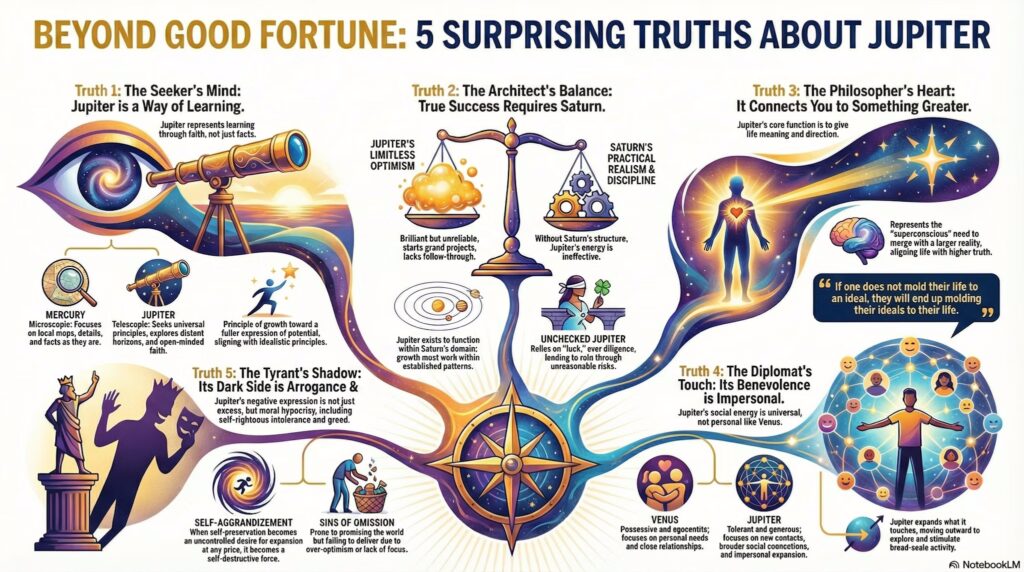
In the 11th house of the collective, fans, and social conscience, we find Jupiter at 18° Taurus, retrograde.
The 11th house is the audience and the crowd’s values; Taurus is what is tangible, worthwhile, and enduring. Jupiter retrograde suggests revision and course correction.
This speaks directly to the historical twist:
- The public (11th) objects to the original ending. Children send letters. Parents protest.
- The producers re-edit the special (Jupiter Rx) to add the now-classic scene where Santa and Rudolph return to the Island of Misfit Toys.
- The story’s moral ledger is balanced (Taurus): the toys are no longer abandoned; they are recognized as worthy of homes.
Jupiter in Taurus also describes the later material value of the Rudolph puppets and the special’s long-term legacy:
- Misfit puppets were nearly discarded, then rediscovered in an attic, and eventually sold for hundreds of thousands of dollars
- The ongoing stream of reruns, merchandise, and licensing—the embedding of Rudolph in the economic as well as emotional fabric of the holidays
Jupiter forms part of an Earth Grand Trine with:
- Jupiter in Taurus (11th)
- Mars–Uranus–Pluto in Virgo (4th)
- Moon in Capricorn (7th)
This grand trine gives the story structural durability in the material world: a painstakingly crafted (Virgo) puppet special (Taurus) woven into relational tradition (Moon in Capricorn/7th). It doesn’t just air once; it becomes enduring in both its physical and cultural forms.
6. Saturn in Aquarius in the 9th: Broadcast Order, Rules, and Reindeer Games
Up in the 9th house, the domain of broadcasting, mass media, and moral frameworks, sits Saturn at 29° Aquarius.
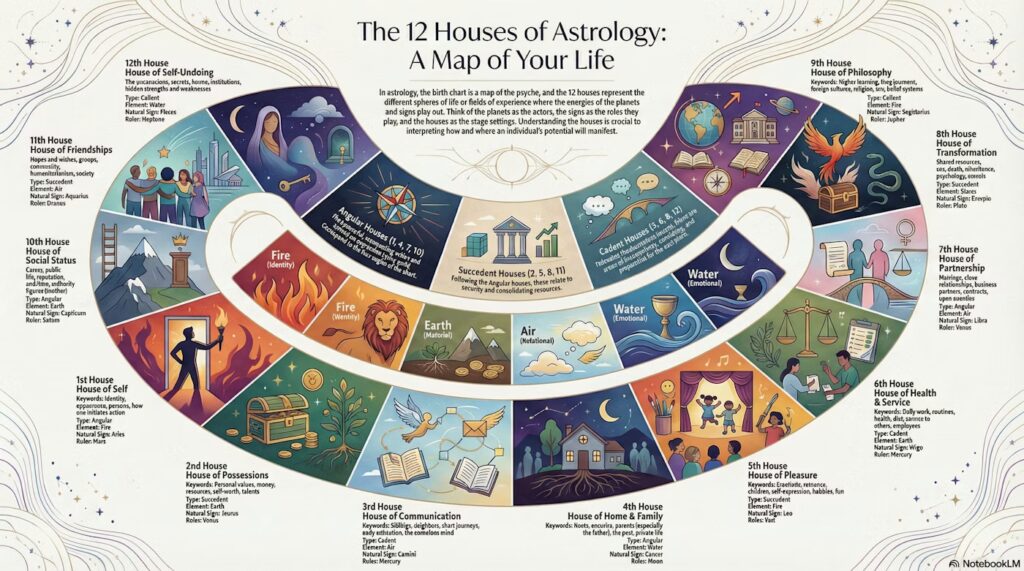
- The 9th house: networks, television, collective narratives, codes of right and wrong
- Aquarius: technology, modernity, collectives, outsider archetypes
- Saturn: rules, institutions, consequences, the “judge”
This describes the NBC broadcast itself: a formalized “GE Fantasy Hour” appointment—a Saturnian ritual carried by Aquarian technology into millions of homes, all filtered through the Cancerian lens of family and emotional bonding.
Within the narrative, Saturn in Aquarius maps to the codified rules of the North Pole:
- Reindeer Games as sorting mechanism
- Coach Comet enforcing exclusion
- Santa as the ultimate Saturnian authority who initially participates in the shaming and only later corrects course
At the last degree of Aquarius, Saturn stands at a critical threshold: the culture is being tested on its willingness to update how it treats outsiders. The story becomes a moral fable about what happens when institutions humiliate difference—and how they should respond instead.
7. The 5th House Cast: Entertainment, Children, and the Misfit Crew
The 5th house, seat of creativity, children, and play, is richly emphasized by Venus and Neptune in Scorpio.
- Venus at 14° Scorpio in the 5th speaks to:
- intensely emotion-laden affection stories for children
- charismatic, slightly dark misfit figures—Hermey, Yukon Cornelius, the misfit toys, even the reformed Bumble
- deep bonds between misfits, captured perfectly in “We’re a Couple of Misfits”: Venus–Neptune art cloaking psychic material in song
- Neptune at 18° Scorpio in the 5th, as we saw, saturates the special with:
- music
- dream logic
- moral allegory disguised as entertainment
This isn’t just light holiday fare. It’s a psychic imprint about shame, exile, friendship, and redemption, encoded in a format a five-year-old can absorb and remember for life.
8. From Shame to Hero: Earth and Mutable Dynamics
When we step back, the chart synthesizes into a very clean narrative arc:
- Cancer Ascendant / Moon in Capricorn (1st/7th)
→ The emotional axis of family belonging vs. social judgment. - Sun in Sagittarius in the 6th square Uranus/Pluto in Virgo in the 4th, and Chiron in Pisces in the 10th
→ A story about usefulness and work roles, where the disruptive misfit trait breaks the system and later becomes the very thing that saves it. - Uranus as the locomotive lead in Virgo in the 4th
→ The core archetype is the weird one at home whose difference cracks open the family/institutional structure and ultimately renews it. - Jupiter in Taurus in the 11th + Earth Grand Trine
→ Audience intervention, lasting cultural value, and the literal physical endurance of the puppets and the special. - Neptune & Venus in Scorpio in the 5th + North Node in Gemini in the 12th
→ Misfit, lost, and “wrong” children and toys given emotional depth, names, voices, and finally a home—even if the story has to be revised midstream to keep that promise.
Astrologically, the premiere chart encodes the core line of the Rudolph myth:
A quality that society may see as a reason for exclusion can, in fact, be a unique and powerful gift.
That’s:
- Uranus (difference) running the locomotive.
- Chiron on the Midheaven broadcasting “the wound is the way.”
- The Nodes are moving us from Sagittarian dogma in the 6th (rigid ideas about proper roles) to Geminian re-narration in the 12th (giving the forgotten a voice and a story).
The sky on December 6, 1964, was already telling the tale: the red nose, the rejected toys, the shamed misfits, the letters from children, the attic puppets turned priceless relics. All of it is there, written into the fabric of the chart—a holiday parable about how culture treats its misfits, and how, eventually, the misfits win.